














South African Infrastructure Outlook 2025–50

Investing in infrastructure, the platform for accelerating human progress

A group of people standing together.
  • Publication
  • May 19, 2026

Africa stands at the threshold of a transformative era in infrastructure investment, set to outpace all other regions in annual growth over the next 25 years.

Investing in infrastructure, the platform for accelerating human progress

PwC’s Global Infrastructure Outlook 2025-2050 is the first of its kind to offer long-term infrastructure spending forecasts to 2050 across nine sectors, 20 subsectors, and 45 countries and territories, representing 88% of global economic output. It draws on the past 20 years of spending data, and models future investment based on economic and policy factors. The outlook highlights that investment in power, transport, and digital infrastructure will increasingly converge to create more intelligent networks, with traditional assets operating as part of connected, digitally enabled and electrified systems.

This report provides a forward-looking view of infrastructure investment in South Africa to 2050, with South Africa being one of four African countries included in the forecast. 

Although the level of investment is substantial, the Infrastructure Outlook 2025–2050 is ultimately about more than just the numbers—it focuses on the direction of capital flows and the transformative shifts in growth. The true opportunity lies not only in bridging the funding gap, but in harnessing capital to create high-performing, resilient assets that drive progress and elevate communities across Africa and beyond.

The takeaways

  • US$151.1 trillion of investment is needed globally to build and maintain infrastructure in the coming decades.
  • Over the next 25 years, Asia-Pacific will account for more than half of global infrastructure, as urbanisation and technology expansion drive growth in the transport, digital, and power sectors.
  • The African countries included in the forecast—South Africa, Nigeria, Ghana and Kenya—have the smallest investment levels but the highest investment growth rate at 77%, rising from around $54 billion to $96 billion in 2050.
  • Stakeholders must collaborate on planning, financing, AI-driven delivery, and early community engagement to accelerate the development of sustainable infrastructure.

Africa: Unmatched demand driven by demographic change

Africa is stepping into a powerful new chapter in infrastructure investment, with annual growth expected to outpace that of all other regions over the next 25 years. According to projections, combined yearly infrastructure expenditure in Ghana, Kenya, Nigeria, and South Africa will surge from $54 billion in 2024 to $96 billion by 2050, representing a 77% increase. 
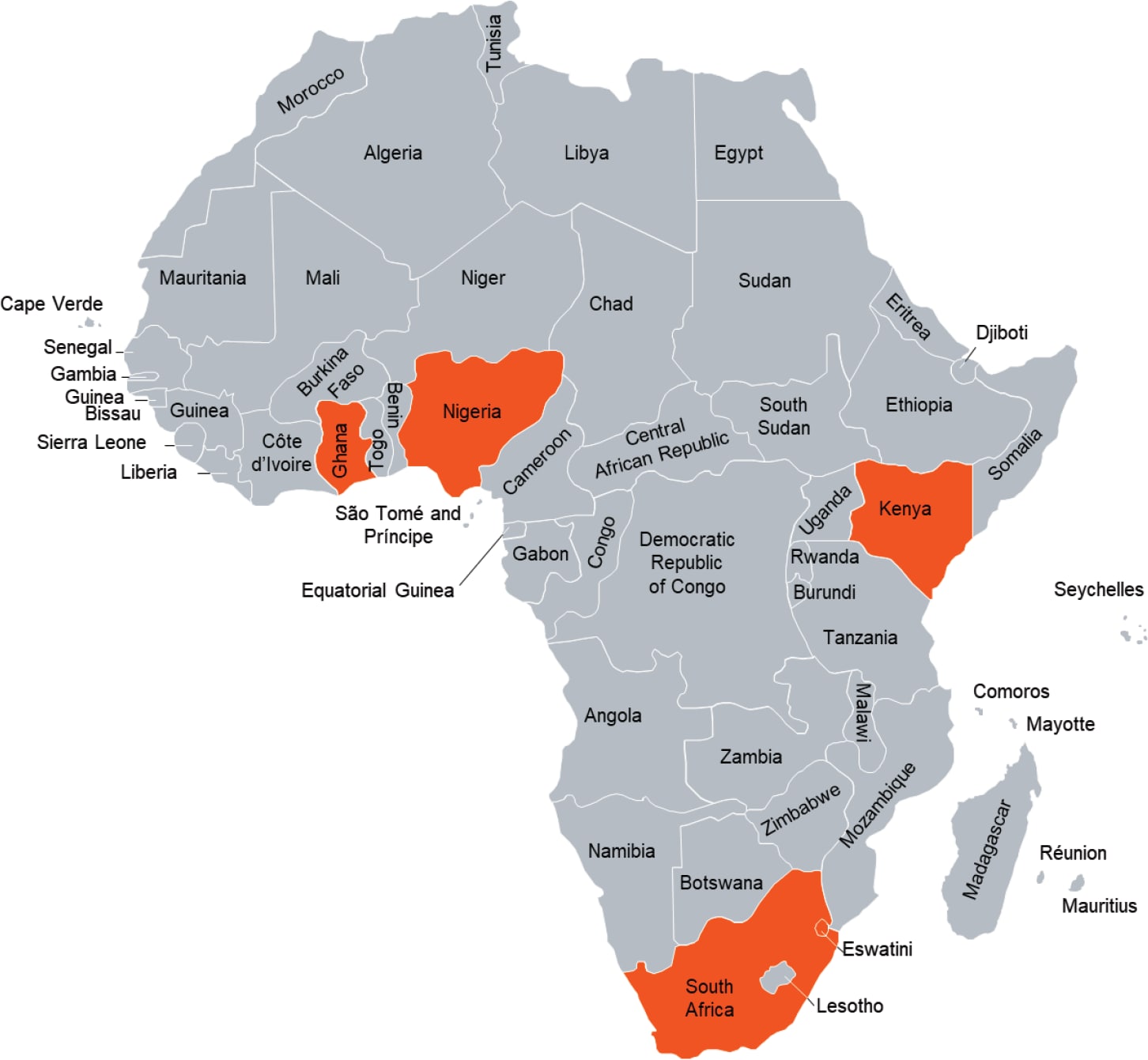
This growth is driven by rapid demographic shifts and accelerating urbanisation. The continent is forecast to welcome over 800 million new urban residents by 2050, with the number of megacities expected to triple. Investment in transport infrastructure, the backbone of Africa’s expansion, will also double as trade corridors broaden. Meanwhile, agriculture and resource infrastructure will emerge as the second- and third-largest sectors, respectively, for investment, underpinning Africa’s evolving economic landscape.

The future of infrastructure–Imagine 2050

Imagine 2050…The world’s infrastructure has been propelled by an extraordinary US$151.1 trillion in new investment in a fundamentally transformed ecosystem: smarter, more resilient, and interconnected across physical, digital, environmental, and social systems. Electrification, data, and automation are the lifeblood of modern societies, with assets like AI-driven compute hubs, high-density data centres, carbon capture networks, and adaptive microgrids scaling rapidly. Roads host autonomous vehicles with embedded wireless charging, while airports evolve into predictive, intermodal hubs managing fleets of drones and electrified aircraft. Businesses rely on automated, clean-energy supply chains, and cities will anticipate community needs, dynamically optimising resources for maximum productivity and quality of life.

This may sound like a lot to expect from the global network of roads, power plants, ports, buildings, and data centres. After all, parts of this network are ageing and in obvious need of repairs and modernisation. But the world—and South Africa—requires and should expect nothing less from its built environment.

This ambition is more important than ever before with key changes afoot in the coming 25 years. A projected 1.8 billion more people will live in cities by 2050, mostly in the Asia-Pacific region and Africa and the number of megacities worldwide will nearly double. Climate impacts are already testing resilience across the African continent, exposing vulnerabilities in transport, energy, and urban systems. The rise of AI, cloud computing, and data-driven services will fundamentally reshape infrastructure needs. And as this Outlook is being written, recent developments in the Middle East are reinforcing how quickly geopolitical shocks can reshape infrastructure priorities. Disruptions to energy flows, shipping routes, and critical industrial inputs highlight the importance of resilience, redundancy, and security alongside efficiency, affordability, and decarbonisation.

This is why PwC commissioned Oxford Economics to produce a new forecast model for infrastructure. Drawing on the last 20 years of spending data, our Global Infrastructure Outlook 2025–2050 uses macro-modelling engines, calibrated to today’s geopolitical and economic realities. The Outlook covers nine sectors and 23 subsectors in 45 countries and territories, recognising the evolution of infrastructure over the past decade. The result? The most comprehensive, market ready global infrastructure forecast available, designed to help investors, policymakers, and industry leaders identify and seize opportunities sooner and with far greater precision.

Africa's infrastructure demand is a generational investment opportunity

Africa has a unique opportunity to be at the forefront of the infrastructure transformation set to be driven by unmatched demographic shifts and urbanisation, and the need to build entirely new infrastructure networks that will rewire the foundations of economic growth and social prosperity. 

Delivering this vision requires collaborative planning, AI-driven delivery, and community engagement to build sustainable, people-centred cities. The focus isn’t simply on building new infrastructure. It is about renewing and modernising its foundation to support long‑term economic prosperity and improve quality of life for future generations. 

Overview

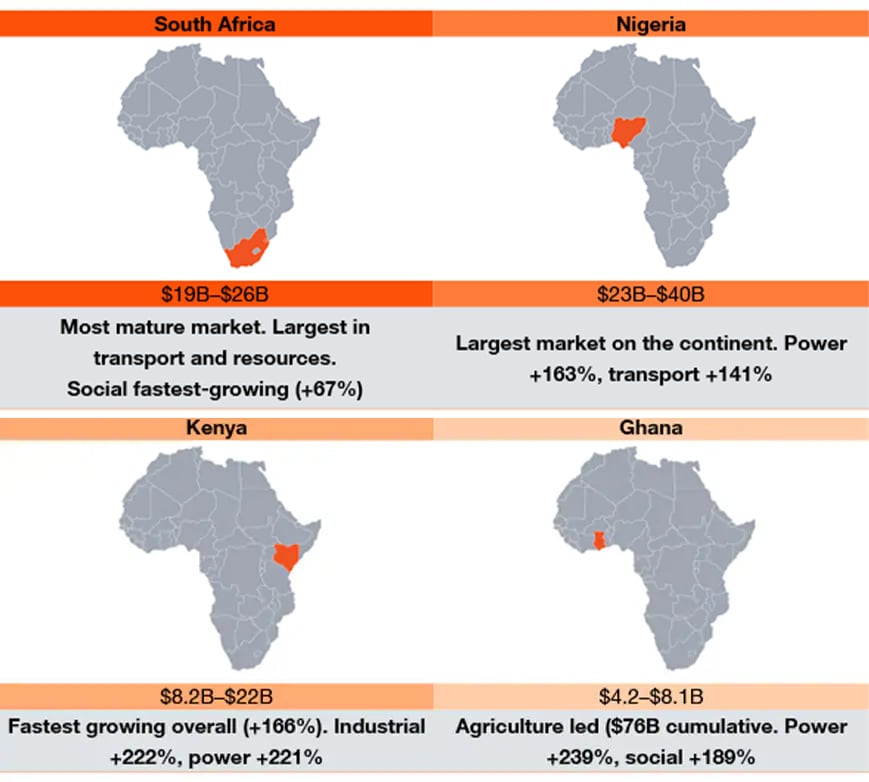
The Global Infrastructure Outlook 2050 projects that South Africa, Nigeria, Kenya, and Ghana will collectively invest USD1.93 trillion in infrastructure between 2025 and 2050. While Africa continues to represent the smallest share of global infrastructure investment, it is expected to record the highest investment growth rate of any region over the next 25 years, at 77%. Yet reaching benchmark levels consistent with those of its high-performing global peers would require substantially more investment, an ambition that opens significant opportunities for both the public and private sectors.

Combined annual infrastructure spend across South Africa, Nigeria, Kenya, and Ghana is forecast to rise from approximately US$54 billion in 2025 to US$96 billion by 2050. Over the same period, the Asia-Pacific region will account for more than half of global infrastructure investment, driven by urbanisation and technology expansion in the transport, digital, and power sectors.
Focus on South Africa

South Africa’s infrastructure spend reached US$19 billion in 2024. Looking ahead, annual infrastructure spend is forecast to grow by 39% from current levels, reaching $26 billion by 2050. While this growth trajectory underscores a strong domestic investment pipeline, it also reflects the accelerating pace of infrastructure development across the broader continent.

A renewed commitment to infrastructure development and institutional reform at the policy level provides meaningful upside potential to the outlook. The National Infrastructure Plan 2050 sets out a strategically phased roadmap, prioritising the buildout of core network infrastructure before expanding into social infrastructure—signalling a disciplined, long-term approach to national development.

Long-term demographic and macroeconomic trends are key drivers of divergence in infrastructure spending trajectories across regions and countries, alongside a range of country- and region-specific factors.

  • Economic growth: South Africa's GDP is forecast to expand by 50% between 2024 and 2050, reflecting a compound annual growth rate (CAGR) of 1.6%. While meaningful in absolute terms, this pace of growth trails both the regional average 2.7% CAGR and the global average 1.9% CAGR, suggesting more moderate demand-side pressure on infrastructure relative to peer markets.
  • Population dynamics: South Africa's population is projected to grow by 24% over the same period at a 0.8% CAGR—below the regional average of 1.4% but above the global average of 0.4%. This moderate demographic expansion will nonetheless sustain demand for both network and social infrastructure over the coming decades.
  • Fiscal position: South Africa's gross government debt stood at 77% of GDP in 2024, above both regional and global averages. This elevated debt burden may constrain the government's capacity to finance large-scale infrastructure programmes through public balance sheets alone, reinforcing the importance of private capital mobilisation and innovative financing mechanisms.

Note: regional and world averages are based on the 43 countries included in the underlying analysis. The averages are not weighted – for instance, the 7% increase in the ‘world’ population between 2024-2050 is the average of the growth rate of 43 countries, as opposed to a 7% increase in the world population. 

The cumulative baseline infrastructure spend between 2025–2050 by infrastructure sector is illustrated below.

Graph 3

Transport infrastructure represents the single largest investment category, with cumulative spend of $155 billion between 2025 and 2050—accounting for 27% of total infrastructure investment over the period. Resources infrastructure follows closely at $128 billion, while power infrastructure rounds out the top three at $83 billion.

Together, these three sectors are expected to absorb 63% of South Africa's total infrastructure spend by 2050, underscoring the centrality of physical connectivity, resource development, and energy security to the country's long-term growth agenda.

Beyond these core sectors, digital infrastructure emerges as the next most significant area of investment at $71 billion—reflecting the need to expand broadband access and digital connectivity. Social infrastructure follows at $57 billion, with water ($30 billion), agriculture ($28 billion), industrial ($26 billion), and defence ($4.3 billion) infrastructure completing the investment landscape over the forecasted period.


Graph 4

Social infrastructure stands out as the fastest-growing sector, with annual spend forecast to increase by 67% between 2024 and 2050—rising from $1.6 billion to $2.7 billion. This growth trajectory is underpinned by the pressing need to address a significant backlog in health and education provision. 

Power infrastructure is the second-fastest-growing sector, with annual investment rising from $2.5 billion to $4.0 billion over the same period—a 59% increase driven by ongoing efforts to secure energy supply and advance the country's climate objectives. Transport infrastructure follows closely, with annual spend climbing 57% to reach $7.7 billion by 2050, reflecting sustained demand for improved physical connectivity and logistics capacity. 

Robust growth is also anticipated across a number of other sectors through to 2050: water infrastructure spend is projected to rise 57% from current levels, followed by agriculture at 56%, industrial at 54%, defence at 50%, and digital at 30%. Resources infrastructure is the notable exception, with annual spend forecast to contract modestly by 5% over the period—pointing to a gradual shift in the composition of South Africa's infrastructure investment portfolio.

Graph 5

Roads and bridges dominate South Africa's transport infrastructure landscape, with a cumulative investment of $138 billion over 2025–2050—representing 89% of total transport spend. Rail infrastructure is a distant second at $7 billion, while ports and airports account for $4.8 billion and $5.0 billion, respectively, over the same period.

In terms of growth dynamics, airport infrastructure is expected to see the fastest annual spend increase, driven by modernisation requirements and rising passenger volumes. Roads and bridges follow as the second-fastest-growing segment, with annual investment projected to reach $7 billion by 2050—a 58% increase from current levels—supported by network expansion and the need to address a substantial maintenance backlog. Rail and ports infrastructure exhibit more moderate growth trajectories, with annual spend rising 47% and 40% respectively by 2050.


Graph 6

The metals and minerals segment is the dominant segment within South Africa's resources infrastructure spend, with a cumulative investment of $88 billion between 2025 and 2050—accounting for 69% of total resources expenditure. Coal follows at $26 billion, while the oil and gas segment represents a comparatively modest $14 billion over the forecast period.

However, despite accelerating global demand for copper, battery metals, and rare earths, annual spend on metals and minerals infrastructure is expected to see a small real-terms decline of 4% by 2050, falling to $3.2 billion. This trajectory reflects deep-seated structural challenges: South Africa's share of global exploration activity has contracted consistently over recent decades as ongoing constraints in logistics and power supply continue to weigh on the mining sector’s competitiveness.


Graph 7

Renewables represent the largest and fastest-growing segment of South Africa's power infrastructure spend, with a cumulative investment of $48 billion between 2025 and 2050—comprising 58% of total power sector expenditure. Transmission and distribution (T&D) is the second-largest segment at $25 billion, followed by markedly smaller allocations to fossil fuel generation ($5.8 billion), nuclear ($3.3 billion), and storage ($1.6 billion).

The growth outlook reinforces the trajectory of South Africa's energy transition. Annual renewable spend is forecast to surge by 90%, reaching $2.4 billion by 2050, while T&D investment will rise 37% to $1.2 billion by mid-century—reflecting the critical need to expand and modernise grid infrastructure to accommodate a more distributed and variable generation mix. Fossil fuel, by contrast, is set to decline in annual spend terms, while energy storage—currently at negligible levels—emerges as a new and growing area of investment over the forecast horizon.

Graph 7

Infrastructure delivery has not kept pace evenly across the world. A benchmarking analysis shows that countries which have historically spent more on infrastructure as a share of GDP consistently achieve higher scores in access, quality and efficiency. Scores for South Africa are set out below. 

  • Logistics quality infrastructure scores 72/100, above the African average but below the global average. 
  • Road infrastructure quality based on subjective and objective measures is scored 65/100, above Africa but below the global rate. 
  • 5G networks cover 51% of the population, higher than the 19% for the rest of Africa but below the global average of 78%.
  • Renewables or nuclear capacity is equal to 24% of total installed capacity, lower than the African and global averages.

Note: Logistics infrastructure quality (2023). Road infrastructure quality (2019). 5G coverage (2024). Safely managed drinking water (2022). Renewables/nuclear capacity (2024). Regional and world averages are based on the 43 countries included in the underlying analysis. The averages are not weighted to population. 


Graph 8

A benchmarking analysis was conducted, comparing South Africa’s infrastructure spending as a percentage of GDP against that of high-spending countries over the past two decades. The benchmarking was performed across regions, covering 43 countries.

The desired benchmark level of spending reflects the investment required for a country to align with high-performing peers across all sectors. This is presented as additional spend on top of baseline levels.

South Africa’s infrastructure spending is estimated at 5.0% of GDP in 2024, with the benchmark level of spend estimated at 7.5%. The baseline annual infrastructure spend is projected to increase by $7.4 billion by 2050, while reaching desired benchmark levels of spend would require an additional $14 billion in 2050. Cumulative spending under baseline is equal to $582 billion between 2025-2050, rising to $896 billion if benchmark levels are met. 

Renewed government policy support for infrastructure and institutional reform provides an upside to the outlook. The National Infrastructure Plan 2050 outlines a phased approach to developing core network infrastructure followed, by social infrastructure.

The long game: Why and how South Africa builds matters as much as what it builds

As South Africa enters a period of transformative growth, the decisions we make today about transport, water, energy, sanitation and digital connectivity will define the lived experience of generations. This section sets out three interlocking imperatives, and the actions that will turn infrastructure spend into enduring value. The three imperatives are: 

  • Plan cities as living ecosystems—not as assemblages of roads, pipes and concrete. 
  • Build transport systems around people, not cars, leveraging the modal-shift baseline we already have. 
  • Deliver the invisible essentials—water, energy, sanitation, connectivity—smarter, leaner, and more resilient. 

Infrastructure planning – South Africa's most consequential decisions 

Infrastructure planning sets the direction, pace and nature of infrastructure investment. Planning decisions can set decade lasting trajectories that either maximise or dilute the value of the initial investments made. 

  • From siloed development to integrated innovation clusters 
  • Reconfiguring cities as investment magnets
  • Human centric built form
  • Designing for talent attraction
  • Designing for emotion and civic identity 

Building transport systems worthy of South Africa's ambition 

Transport infrastructure is expected to receive ~USD$155 billion in baseline investments between 2025 and 2050, representing 27% of total infrastructure investment across the nine sectors.

  • Overcoming the tyranny of distance
  • Making a positive leap in modal split
  • Transitioning to renewable energy propulsion
  • Pioneering new business models for an industry in transition
  • Unlocking the potential of demand-responsive services

Flowing, charging, connecting: Building the essential infrastructure South Africa needs 

Essential infrastructure improvements that South Africa needs, ranges from water and sanitation to power and social infrastructure. While transport is a single dominant sector, the collective remaining sectors is what sustains quality of life and economic prosperity. 

  • Supply keeping pace with demand
  • Ageing infrastructure and the maintenance deficit
  • Funding new capacity in a fiscally constrained era
  • The escalating threat of climate disruption
  • Delivering life-cycle efficacy

Infrastructure planning–South Africa's most consequential decisions

South Africa's cities are not merely assemblages of roads, pipes and power lines. They're living ecosystems where human potential either flourishes or fails. Planning decisions set decade-long trajectories. Get them right, and every rand invested compounds. Get them wrong, and we dilute the value of everything that follows.

Between 2025 and 2050, US$582 billion in baseline infrastructure spend is forecast across the country. This is the opportunity to shape.

From siloed development to integrated innovation clusters

Across many cities, not only in South Africa, urban zones tend to develop in functional silos—commercial parks separated from residential neighbourhoods, technology hubs isolated from manufacturing corridors, commercial districts detached from educational institutions. This fragmented spatial logic limits interaction between industries and sectors that drive innovation and unlocks agglomeration economies.

The challenge for infrastructure planners is to engineer cities where different activities are close enough to benefit from each other. This means intentionally bringing together businesses, knowledge institutions, creative enterprises, and community spaces so they feed off one another. Without this kind of planning, South African cities risk replicating the sprawling, disconnected urban patterns that have plagued development elsewhere, forfeiting the productivity multipliers that come from clustering.

Sustainable urban growth across South Africa presents a significant opportunity for cities to attract and nurture valuable inward investment. While challenges, such as business costs, regulatory complexities, and evolving policy frameworks exist, there is growing momentum towards creating more welcoming environments for capital. By embracing reforms and innovative approaches, cities can actively encourage investment that supports vibrant, productive urban economies. 

Infrastructure planning is increasingly viewed as an integral part of a dynamic investment ecosystem. Roads, utilities, and digital connectivity lay the foundation, but planners are now thinking more holistically about how cities can become investment-friendly, reducing barriers through streamlined land-use processes and transparent incentives. With this positive shift, even the most ambitious urban visions can be realised, creating new economic opportunities and inspiring citizens to engage and thrive. 

Perhaps the toughest challenge facing infrastructure planning in Africa is to take the learnings from the developed world versus repeating mistakes through emulation. One of the most common missteps is building cities around machines rather than people.

For over a century and a half, the shape of cities around the world has been dictated by the dominant mobility technology of the era. Suburbia, multi-lane motorways devouring precious land, and car-dependent spatial layouts are all symptoms of private automobiles being allowed to shape design. 

The challenge is to resist this path dependency and instead pursue human-centred infrastructure that prioritises walkability, mixed-use density, public transit and non-motorised transport networks. Given that most of Africa's urban residents do not own private vehicles, designing cities around cars is not just poor planning; it is a fundamental misalignment with the lived reality of the population.

Plan for

  • Walkability and mixed-use density
  • Public transit as backbone
  • Protected non-motorised networks
  • Co-location of housing and jobs

Plan against

  • Highway-led expansion
  • Single-use zoning sprawl
  • Car-dependent suburbia
  • Peripheral affordable housing

The world's most skilled professionals, entrepreneurs and innovators remain inherently ’footloose’, willing, and able to relocate to wherever offers the best quality of life, opportunity, and environment for their families. South Africa’s cities are competing in this global talent marketplace, whether they acknowledge it or not. 

The infrastructure planning challenge here extends well beyond office parks and broadband speeds. It encompasses the quality of schools, healthcare access, public safety, cultural vibrancy, green spaces and the overall liveability of a place. Cities that fail to plan holistically for talent attraction risk losing skilled people, which undermines long-term economic growth and prosperity. A talent-rich population is not a byproduct of development; it is a prerequisite, and infrastructure must be planned accordingly.

Finally, there is a challenge that is often overlooked in technical studies but is no less critical: the failure to design places that make people feel something

South African infrastructure projects must be designed beyond efficiency and functionality. Real attention should be given to the emotive dimension by, for example, keeping in mind how a well-designed public square can be used to instil civic pride, the role of cultural infrastructure in nurturing identity, and the power of inspiring architecture to signal ambition and belonging. 

The challenge for planners is to embed cultural intentionality in infrastructure from the outset, creating spaces and assets where the arts thrive, where communities gather with purpose, and where the built environment tells a story that residents see themselves in. Without this, cities may function, but they will not inspire. And cities that do not inspire will struggle to retain the hearts, minds and energies of their people. 

The infrastructure planning challenge is not fundamentally about concrete, steel or capital, though all three matter enormously. It is about breaking away from one‑size‑fits‑all approaches and ensuring the concrete, steel and capital are forged around human need, economic magnetism, cultural vitality, and long-term resilience. 

Building transport systems worthy of South Africa's ambition

Mobility serves as one of the most powerful enablers of economic participation. It is the connective tissue between people and opportunity. Yet for all its enabling potential, mobility remains one of the most significant cost burdens, measured not just in fares and fuel but in hours lost to congestion, in the physical toll of unsafe and overcrowded transport, and in the mounting environmental consequences of carbon-intensive systems.

The ambition should be bold but clear: near-frictionless access to opportunity at the lowest possible cost, financially, temporally and environmentally.

Unlike older, more rigid urban systems in Europe and North America, many African cities still have a rare opportunity to build mobility networks before car-centric infrastructure locks in decades of inefficiency. This is not a disadvantage. It is an extraordinary window of opportunity. But seizing it requires confronting five fundamental challenges head-on. 

Across Africa's fastest-growing cities, Lagos, Nairobi, Johannesburg, Accra and Dar es Salaam, a persistent spatial mismatch continues to undermine economic inclusion. Affordable housing is overwhelmingly located on the urban periphery, far removed from the employment centres, commercial nodes and service hubs where opportunities are found. The result is a difficult daily reality for millions: two-hour-plus round-trip commutes. According to the South African 2020 National Household Travel Survey (Stats SA, 2022), travel cost surpassed travel time as a national priority (30,8% of households), while travel time was important to 23,3% and flexibility was mentioned by 11,9%. 

South Africa and Africa have the opportunity to fundamentally reimagine the relationship between where people live and where they work. This means integrating land-use and transport planning in ways that older cities never managed, ensuring that affordable housing developments are co-located with economic activity, that transit corridors anchor mixed-use development, and that digital connectivity reduces the need for physical travel where possible. Bringing opportunity and people together instead of forcing people to chase opportunity across vast distances is not just a transport fix, it is an equity imperative, and planners are increasingly recognising it as such. 

Although most Africans depend on walking, cycling, and informal public transport, investments have mainly supported private vehicle infrastructure such as wider roads, interchanges, and large parking areas. Meanwhile, active mobility infrastructure remains inadequate, and higher-capacity formal public transport systems such as bus rapid transit and regional, commuter and light rail are absent, underfunded, or fragmented. 

Ironically, the modal shift baseline is already favourable. The opportunity lies in making walking, cycling, and public transport safer, more dignified, more efficient, and more integrated. Investing in protected cycling infrastructure, pedestrian-priority streetscapes and well-designed bus rapid transit networks can leapfrog the car-dependent trap entirely. Cities and regions such as Lagos, Cape Town, and Gauteng are already demonstrating what is possible. The challenge is to accelerate these efforts at scale and make sustainable modes so attractive that even those who can afford a private vehicle choose not to use one. 

The global conversation around transport decarbonisation has largely centred on electrification. But for South Africa, simply swapping internal combustion engines for electric motors is insufficient if the electricity powering those motors comes from fossil fuel sources. True decarbonisation demands electrification coupled with a high renewable energy mix, and the continent faces real hurdles in grid reliability, charging infrastructure, upfront vehicle costs and the availability of locally appropriate electric vehicle technology. 

Notwithstanding this, South Africa has an extraordinary renewable energy endowment. The continent as a whole—and South Africa in its own right—possesses some of the planet's richest solar irradiation, significant wind resources, and vast hydroelectric potential, much of it still untapped. This means that transitioning to electric modes of transport could be genuinely green from the outset and not retrofitted onto a fossil-dependent grid as an afterthought. The country has a realistic pathway to not just follow the global energy transition, but define a version of it that is cleaner, more decentralised, and more resilient. 

Africa's transport sector, from paratransit operators running minibus fleets to formal bus companies and motorcycle taxi networks faces profound disruption. Legacy business models built around diesel vehicles, cash fares, informal route licensing and fragmented ownership structures are increasingly misaligned with the demands of a modernising, electrifying, digitising mobility landscape. Public transport operators risk losing relevance if they cannot evolve to attract choice riders, that is, passengers who have alternatives and will only use transit if it is competitive on comfort, reliability and cost. Fleet replacement at scale requires capital that most operators do not have. New energy supply models, battery swapping, depot charging, and pay-per-kilometre leasing are needed to keep electric fleets viable, but the financing and regulatory ecosystems to support them are still emerging. 

At the same time though, disruption presents opportunity. The very informality that has long been cited as a weakness can, with the right policy frameworks, become a source of entrepreneurial agility. New business models are already taking root: mobility-as-a-service platforms in Lagos and Nairobi, electric motorcycle leasing operations in Kigali and Kampala, digital fare collection systems transforming the economics of minibus operations across multiple cities. For South Africa, the challenge is to create regulatory clarity, financing mechanisms, and technical support structures that allow these innovations to scale, enabling existing operators to transition rather than be displaced and ensuring that the economic benefits of the new mobility economy are broadly shared.

Fixed-route, fixed-schedule transport works well in dense urban corridors with predictable demand patterns. But many of Africa's and South Africa’s mobility needs do not fit this mould. In peri-urban areas with their dispersed populations, off-peak travel demand, last-mile connections from transit hubs to final destinations, and the unpredictable travel patterns of informal economy workers there is a call for more flexible, responsive service models. Demand-responsive transport with services that deploy vehicles where and when they are needed offers a compelling solution. However, realising its potential requires thoughtful infrastructure provision, digital platforms that are accessible to low-income users, and regulatory frameworks that allow such services to integrate seamlessly into broader mobility ecosystems rather than operate as isolated novelties. 

Africa is arguably the world's most fertile ground for demand-responsive innovation. The continent's mobile money penetration, smartphone adoption rates and digital literacy among young urban populations provide a foundation for app-based, on-demand mobility services, which are indeed already being piloted. The opportunity is to embed demand-responsive minibus routing, shared ride-hailing for underserved corridors, and digitally optimised paratransit scheduling within an integrated mobility ecosystem. This ecosystem needs to be connected to transit networks such as passenger rail and bus rapid transit which are supported by dedicated pick-up and drop-off infrastructure, and governed by policies that encourage complementarity rather than competition. Done well, demand-responsive services can fill the gaps that fixed-route systems can’t reach, extending the benefits of modern mobility to populations and geographies while urban densification catches up. 

Mobility challenges are real, complex, and urgent. But they are not impossible to overcome. The continent can harness the momentum of demographic shifts and urbanisation by thoughtfully directing the transport infrastructure investment needed over the next 25 years.

The building blocks—renewable energy abundance, young innovation ecosystems, digital infrastructure, and a population that already overwhelmingly travels by sustainable modes—are in place. What remains is to connect them with purpose, urgency and a relentless focus on the outcome that matters most: 

Ensuring that every citizen can access opportunity with minimal friction, at the lowest possible cost, without compromising the planet they will pass on to their children.


Flowing, charging, connecting: Building the essential infrastructure South Africa urgently needs

The most visible infrastructure in any city, namely roads, bridges, and public transport systems, command the most attention. But the systems that truly sustain human life operate largely unseen.

Water networks, sanitation systems, electrical grids and telecommunications infrastructure work silently in the background, keeping cities functional and populations healthy. Across Africa, where urbanisation is advancing at pace, these invisible systems face extraordinary pressure.

The challenges are significant. But so is the opportunity to build smarter than before.

Rapid population growth, rural-to-urban migration and rising living standards are driving surging demand for water, energy, sanitation and digital connectivity. The combination of keeping up with maintenance requirements and building new capacity in synchronisation with demand creates a complex challenge for all stakeholders. 

To meet the challenge, South Africa needs to break free from the centralised, capital-heavy infrastructure models of the twentieth century. Modularised and decentralised solutions such as mini –solar grids, modular water treatment plants, and satellite broadband can be deployed incrementally and scaled responsively. This approach allows capital to be deployed in an affordable way,pacing demand, versus traditional models of substantial upfront capital investment associated with large supply provision years ahead of demand and, by implication, revenue materialising.

Much of the existing urban infrastructure in South Africa, as elsewhere in Africa, dates from the colonial or early post-independence era, when it was designed for far smaller populations. Decades of deferred maintenance have created a vicious cycle: neglected assets deteriorate, eventual repair costs multiply and scarce resources are perpetually consumed by crisis response rather than planned renewal. For example, non-revenue water loss estimates through degraded networks of 40 to 60 percent are not uncommon. 

Technologies such as smart sensors, predictive maintenance, IoT-enabled monitoring, and digital twin technology now allow infrastructure operators to extend asset life and prioritise interventions with precision. It’s crucial to leapfrog reactive maintenance cultures entirely to create the capacity to build what’s needed next.

Across Nigeria, Ghana, Kenya and South Africa alone, $54 billion of investment in infrastructure was needed in 2025, set to grow to $96 billion in 2050. Governments are simultaneously contending with declining GDP growth per capita, rising debt burdens and constrained borrowing capacity. Yet the obligation to provide essential services to growing urban populations does not pause for economic downturns. This is exacerbated by having to balance investment between critically needed social infrastructure and economic infrastructure that enables productivity and competitiveness. Traditional public funding models alone cannot close the gap.

This creates a testing ground for innovative financing, with green bonds, blended finance vehicles, land value capture instruments, and infrastructure investment trusts gaining traction. The sheer scale of unmet demand represents a compelling proposition for institutional investors seeking long-duration returns. The capital exists globally, and the enabling environment to attract it is steadily improving.

Africa contributes less than four percent of global emissions yet bears a disproportionate burden of climate impacts. Flooding in Durban, drought in the Horn of Africa and cyclones in Mozambique are exposing infrastructure designed for climate conditions that no longer exist. Cities face a dual mandate: expanding capacity to meet growing demand while simultaneously adapting to an increasingly volatile threat environment. 

This challenge will require not just innovative technical solutions but innovation in infrastructure finance and a rethink of the insurance sector’s business model. Fortunately, the global climate finance architecture, including the Green Climate Fund, the Africa Adaptation Acceleration Program and a growing ecosystem of climate-focused investors, is beginning to direct meaningful capital toward African resilience. 

It is not enough to build new infrastructure. South Africa must get dramatically better at making the right investment choices in the right sequence, delivering projects efficiently, maintaining assets diligently and continuously improving operational performance. Without this, the cumulative result is infrastructure that delivers far less value than the investment warrants. 

Efficacy gains are among the highest-return investments any government can make—and they do not always require new capital. Better data transforms prioritisation. Performance-based contracts align incentives around long-term outcomes. Digital platforms optimise existing networks. South Africa has the opportunity to embed life-cycle thinking from the outset rather than retrofitting it decades later.

The continent is urbanising at a time when better tools, technologies and financing models to build better infrastructure are more accessible than ever. South Africa can build decentralised rather than monolithic, smart rather than passive, resilient rather than rigid. The challenges are immense. But the window of opportunity over the next 25 years is immense. 

An approach to bridging the gap between vision and value

We expect the next 25 years to be defined by an unprecedented surge in global infrastructure investment. But there’s no guarantee that the required levels of spending will materialise. Moreover, top-line revenues don’t automatically translate into profitable investments. To unlock value, investors, governments, and corporations will need a strategic, system wide approach that overcomes today’s constraints and accelerates delivery.

The key imperatives of such an approach are the same for South Africa as for the rest of the world.

Political and policy uncertainty and regulatory and planning delays hinder the development of infrastructure and reduce its attractiveness as an investment. At the same time, infrastructure assets are inherently long-lived, often spanning multiple economic and political cycles. To maximise their value, robust frameworks that enable decision-making beyond short-term horizons are needed. This means establishing stable regulatory environments and clear national or regional strategies that provide certainty for investors and delivery partners. Governments should form independent bodies empowered to make infrastructure investment decisions across political parties. In parallel, planning and regulatory approval processes must be streamlined to accelerate delivery and reduce uncertainty.

Concentrating investment in power or digital sectors without making corresponding upgrades in other sectors such as transport or water risks creating bottlenecks that may ultimately constrain both returns and growth. Conversely, spreading and coordinating investment across the infrastructure ecosystem unlocks multiplier effects, while at the same time enabling the alignment of capital, capability, and policy to deliver integrated systems that boost productivity and long-term value. Examples to consider include: combining data centre campuses with clean power purchase agreements and water reuse; developing electric vehicle corridors alongside grid upgrades, battery storage, and depot charging; linking port automation with rail and logistics hubs.

Because public budgets alone will be insufficient, institutional investors, sovereign wealth funds, pension funds, and private credit providers will be central to the next 25 years of infrastructure development. What’s needed is more effective and efficient collaboration between governments and the private sector.

This includes developing new financing structures, risk-sharing mechanisms, and delivery models that leverage the strengths of both sides. One example is capital recycling, wherein governments sell or lease mature infrastructure assets and reinvest the proceeds in new projects—unlocking funding without increasing public debt. A priority will be the rapid bankability of new technologies, such as green hydrogen, geothermal technology, virtual power plants, behind-the-meter platforms, advanced storage, and data centre energy solutions.

This will require standardised performance data, common risk taxonomies, stronger public-sector risk-mitigation tools, and new insurance products that de-risk technologies in the early stages. Blended finance will also need to evolve. Instead of bespoke, deal-by-deal structures, the market will shift towards standardised, scalable platforms: template risk allocation models, platform-level vehicles that pool assets, modular instruments, and digital marketplaces that match de-risked projects to capital, particularly in emerging markets.

Progress is already being made. The introduction of the National Treasury’s Infrastructure and Development Finance Bond in South Africa marks an important milestone in the evolution of public sector infrastructure financing in the country. This milestone signals a strategic transition from treating infrastructure expenditure as a recurrent cost to recognising it as a long-term capital investment.

This approach aligns South Africa with global practices, where sovereign bonds are leveraged to raise substantial funding for essential infrastructure projects and programmes. By engaging capital markets, government can secure the necessary upfront funding to augment other sources for large-scale development, reducing dependence on annual tax revenues and mitigating budgetary constraints that often impede project delivery.

The South African construction sector has experienced a prolonged structural downturn, characterised by declining order books and distress among major listed entities leading to significant job losses. Factoring in the industry’s history, the bond addresses more than just a funding gap, it sends a credible demand signal to a construction industry that has struggled with uncertainty and inconsistent deal flow for over a decade. The exclusive use of the bond mechanism for infrastructure enhances funding certainty, promotes fiscal sustainability for a construction industry that’s in need of renewed confidence and positions infrastructure as an enabler for broader economic growth, improved service delivery, and sustained private sector participation.

By 2050, industries will deliver infrastructure through integrated, cross sector platforms. Energy, transport, digital, water, and industrial systems will be co-designed, co-located, and co-optimised. They’ll be supported by modular construction and automated project controls that compress delivery times and improve accuracy. End-to end building information modelling (BIM), digital twins, and integrated data environments will be universal. Generative AI and agentic AI will transform delivery by predicting long term risks at the concept stage, auto generating and stress testing design and sequencing options, orchestrating complex interfaces, and recommending real time mitigation—thereby reducing overruns, accelerating delivery, and saving billions across capital programmes. In parallel, circular construction practices such as large scale reuse and recycling, low carbon materials, off site manufacturing, and low impact site practices will materially reduce the cost and carbon footprint of major projects.

Outcome-based contracting that is focused on emissions, resilience, reliability, and user experience will become the default. Infrastructure as a service subscription model will expand across energy, digital, mobility, heat, and resilience assets, with data-driven value streams increasingly complementing traditional tariffs. As systems become more integrated, multi-party platform models will replace linear supply chains. These platforms—sharing risk, data, and value across operators, technology providers, investors, and the public sector—will enable faster deployment of infrastructure at a lower cost. 

Community opposition can delay or derail projects. Involving communities from the outset and maintaining an ongoing dialogue helps explain why both public and private investment is needed, and how these projects will bring people real benefits such as more jobs, improved access to places of employment, and better connectivity to essential services. Communities also need to be engaged on the topic of who pays for infrastructure, given the high cost of capital and limited access to financing. Leaders must reframe costs and investments that can generate both financial and social returns in the form of improved quality of life or expanded services.

Acting with courage to unlock South Africa's infrastructure potential

Successfully addressing all these imperatives will require each key group of stakeholders in the infrastructure ecosystem to take specific steps. 

Governments

  • Create enabling environments through transparent project pipelines, streamlined regulatory frameworks, and innovative financing models that attract private capital and accelerate delivery. 
  • Consider targeted intervention in areas where supply chain fragility threatens national resilience.

icon icon

Investors 

  • Recognise the evolving risk-return landscape and align capital with those sectors and regions poised for long-term, stable growth. 
  • Be alert to a changing landscape of opportunity as new sectors emerge as growth areas and global need shifts towards the Asia-Pacific region and emerging markets. 


icon icon

Corporations 

  • Anticipate and adapt to the shifting infrastructure ecosystem by leveraging technology, supply chain resilience, and cross-sector partnerships to capture new opportunities. 


icon icon

Communities

  • Engage early and often in the planning and delivery process. By doing so, you can help realise the promised outcomes of this new age of infrastructure, which include improved quality of life, greater connectivity, and more equitable access to essential services. 

The world will be very different in 2050. South Africa needs a productivity revolution. To deliver that revolution, stakeholders must work together to channel the right investment into the right assets at the right time and in the right ways. Starting today.

Definitions and methodology

Infrastructure spending is defined as gross fixed capital formation (GFCF) by the public and private sectors on fixed, immovable structures that support long-term economic growth. In addition to new spending, it includes replacement spending and capital expenditure on maintenance (i.e., to substantively extend the lifetime of an asset). This measure is a subset of total fixed spending and excludes cultivated biological resources, intellectual property products, transport equipment, and information and communications technology (ICT) equipment.

The definition of infrastructure spending has varying implications for different sectors. A few examples: ICT equipment, such as CPUs and GPUs, which represents a significant proportion of the capital outlays for data centre construction, is not included under the definition of infrastructure. Power infrastructure assets such as solar panels are not explicitly defined under the OECD definition of GFCF. Transport equipment such as rolling stock or ships and planes in the defence sector are not included in the infrastructure figures. 

It should be noted that this is our preferred definition, but the analysis has required us to collect data from a wide range of sources, and definitions inevitably vary across those sources. We have attempted to identify the available data that most closely aligns with the definitions used.

The nine sectors of infrastructure investment analysed in this report consist of spending on fixed assets and structures used for the purposes described below.

Agriculture: The growing of crops, raising and breeding of animals, and harvesting of timber and other plants, including the cost of irrigation and drainage, on-farm structures, and storage facilities. 

Digital infrastructure: The information and communications sectors, including towers, fibre and cable networks, data centres, and related facilities. 

Defence: Physical installations that support defence, including barracks and other military facilities; transport networks, depots, and warehouses; ship-building facilities and dry docks; and communications infrastructure. 

Industrial manufacturing: Plants, facilities, and networks that support heavy metals and chemicals processing, petroleum refining, and automotive manufacturing. 

Power: The generation, storage, and distribution of electricity, including renewable assets, fossil fuel and nuclear power plants, transmission and distribution, and battery storage. 

Resources: The exploration, extraction, processing, transportation, and storage of oil and gas, coal, metals, and minerals, including mining facilities, pipelines, refineries, and storage terminals. 

Social infrastructure: The provision of health or education services, including aged care facilities. 

Transport: Transportation, including roads, bridges, tunnels, railways, airports, ports, and marine works.

Water: The treatment and distribution of water, including sewage and drainage systems. Assets include treatment plants, dams, pipelines, and drains. 

Each region in the Outlook is represented by a group of countries and territories that act as a viable proxy for the whole. The proxies for each region are:

Africa: Ghana, Kenya, Nigeria, South Africa

Americas: Brazil, Canada, Chile, Mexico, United States 

Asia-Pacific: Australia, Chinese Mainland, Hong Kong SAR, India, Indonesia, Japan, Malaysia, New Zealand, Philippines, Republic of Korea, Singapore, the Taiwan region, Thailand, Vietnam. 

Advanced or mature economies in the Asia-Pacific grouping include Australia, Japan, Hong Kong SAR, New Zealand, Republic of Korea, Singapore, and the Taiwan region. Developing and emerging Asia-Pacific economies include the Chinese Mainland, India, Indonesia, Malaysia, the Philippines, Thailand, and Vietnam. Definitions are based on IMF aggregations, found here.

Europe: Belgium, Czechia, Denmark, Finland, France, Germany, Greece, Ireland, Italy, Netherlands, Norway, Poland, Spain, Sweden, Türkiye, United Kingdom

Middle East: Gulf Cooperation Council (GCC) members: Bahrain, Kuwait, Oman, Qatar, Saudi Arabia, United Arab Emirates

The main challenge in providing comparative infrastructure spending figures across countries and sectors is the lack of a single and consistent dataset. A comprehensive data sourcing exercise was undertaken for the analysis contained in this report. Most data sources, accessed in 2025, provided figures up to either 2023 or 2024.

The main sources of spending data used were the OECD, Eurostat, and national statistical agencies. Data that was not available from official public sources was estimated using a variety of techniques. This process involved using additional data sources (International Energy Agency, Milex), estimating sectoral infrastructure spending from sectoral capital expenditure, or using available metrics from peer countries to estimate spending. 

Oxford Economics created a new database of infrastructure spending forecasts to anchor PwC’s research. The forecasts are based on Oxford Economics proprietary models for the construction industry and cover nine sectors in 45 countries and territories. The infrastructure spending forecasts are globally consistent and are linked through global and country-level assumptions of trade volume and prices, competitiveness, capital flows, interest and exchange rates, and commodity prices. For a particular country and sector, the infrastructure spending forecast is informed by end-use demand factors such as population growth, income growth, cost of capital, and economic activity across sectors. Given the changing composition of economies over time, the infrastructure spending forecast will diverge from country-level GDP.

The database provides a structural economic framework that considers both supply and demand factors affecting sectoral growth. This is distinct from spending projections based on a pipeline of publicly announced projects, which are unable to provide long-term projections of spending due to a lack of project visibility in the future. The new infrastructure spending forecasts provide a macroeconomic outlook on future spending outcomes across the countries and sectors examined in this report. 

The calculations for defence stem from a slightly different methodology. Unlike other sectors, these projections are not derived from structural economic modelling; instead, they assume a fixed share of GDP, adjusted for announced and anticipated changes to defence spending as a percentage of future GDP. These reflect policy signals such as NATO’s interim target of allocating 1.5% of GDP to defence infrastructure (excluding equipment and personnel) by 2035, on the path towards a longer-term ambition of 5% of GDP

What’s your outlook?

To discuss our research findings, please contact your local PwC Infrastructure leader.

Private capital at a crossroads

As industries converge and disruption intensifies, five key principles will help firms seize emerging opportunities.

Infrastructure at PwC

From vision to value: scaling infrastructure for tomorrow.

Follow us

Contact us

Jarendra Reddy

Jarendra Reddy

Infrastructure Leader, PwC South Africa

Tel: +27 (0) 31 271 2000

Nino Manus

Nino Manus

Director | Sustainable Water Management, PwC South Africa

Tel: +27 (0) 11 059 7258

Albie Alant

Albie Alant

Director | Project Finance, PwC South Africa

Tel: +27 (0) 11 797 5831

Hide